Before the New Year Burns Bright
It is five o'clock in the morning when I leave Hanoi and head towards Quang Phu Cau, a small village on the outskirts of the city. The streets are still dark and quiet, but in this village the day has already begun.
In the weeks leading up to Tết, the Vietnamese Lunar New Year, Quang Phu Cau works almost around the clock. Here, millions of incense sticks are produced and shipped across Vietnam, destined for family altars, pagodas and temples. During Tết, when families honour their ancestors and pray for health, happiness and prosperity, incense becomes an essential part of daily life.
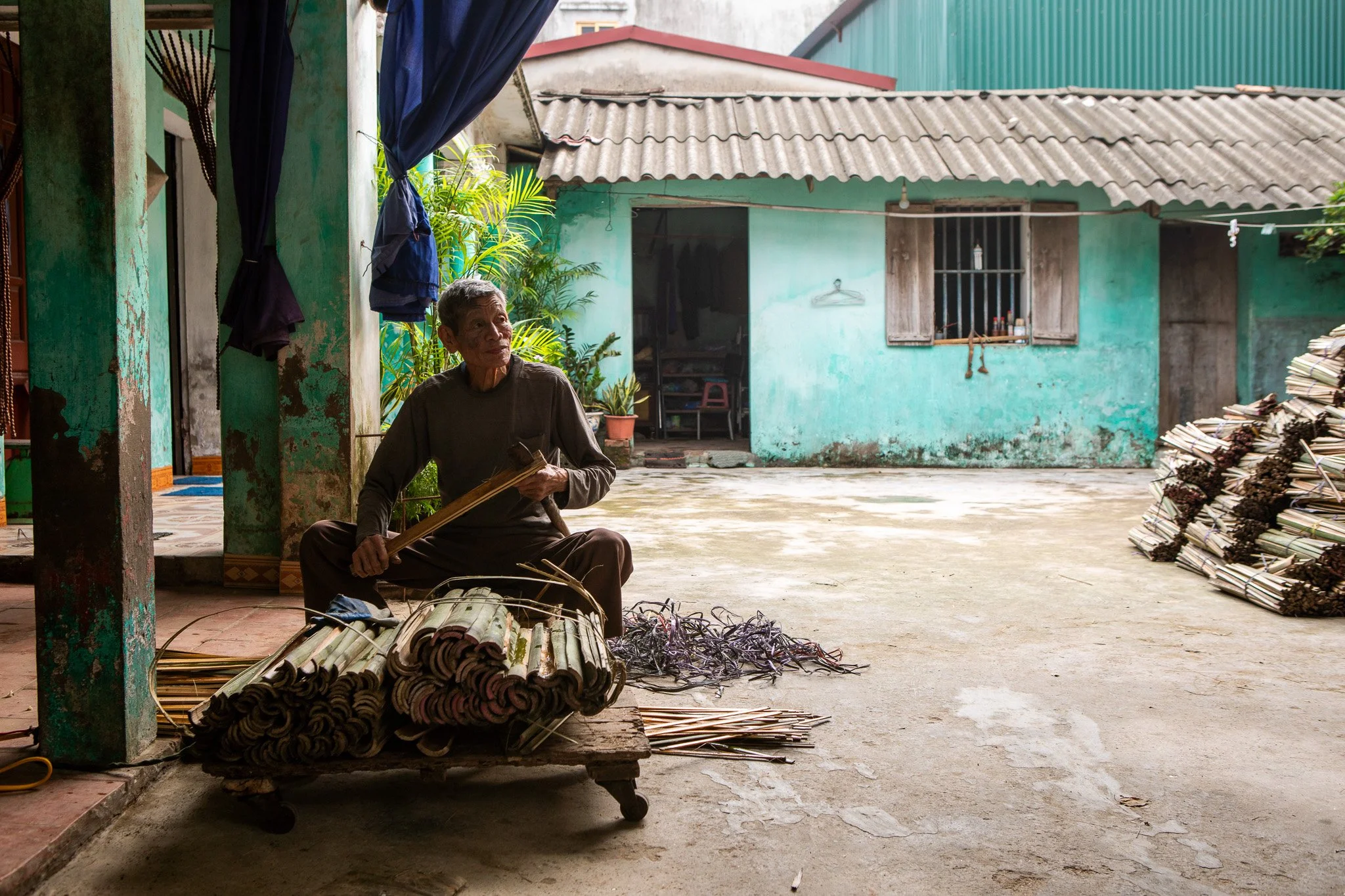
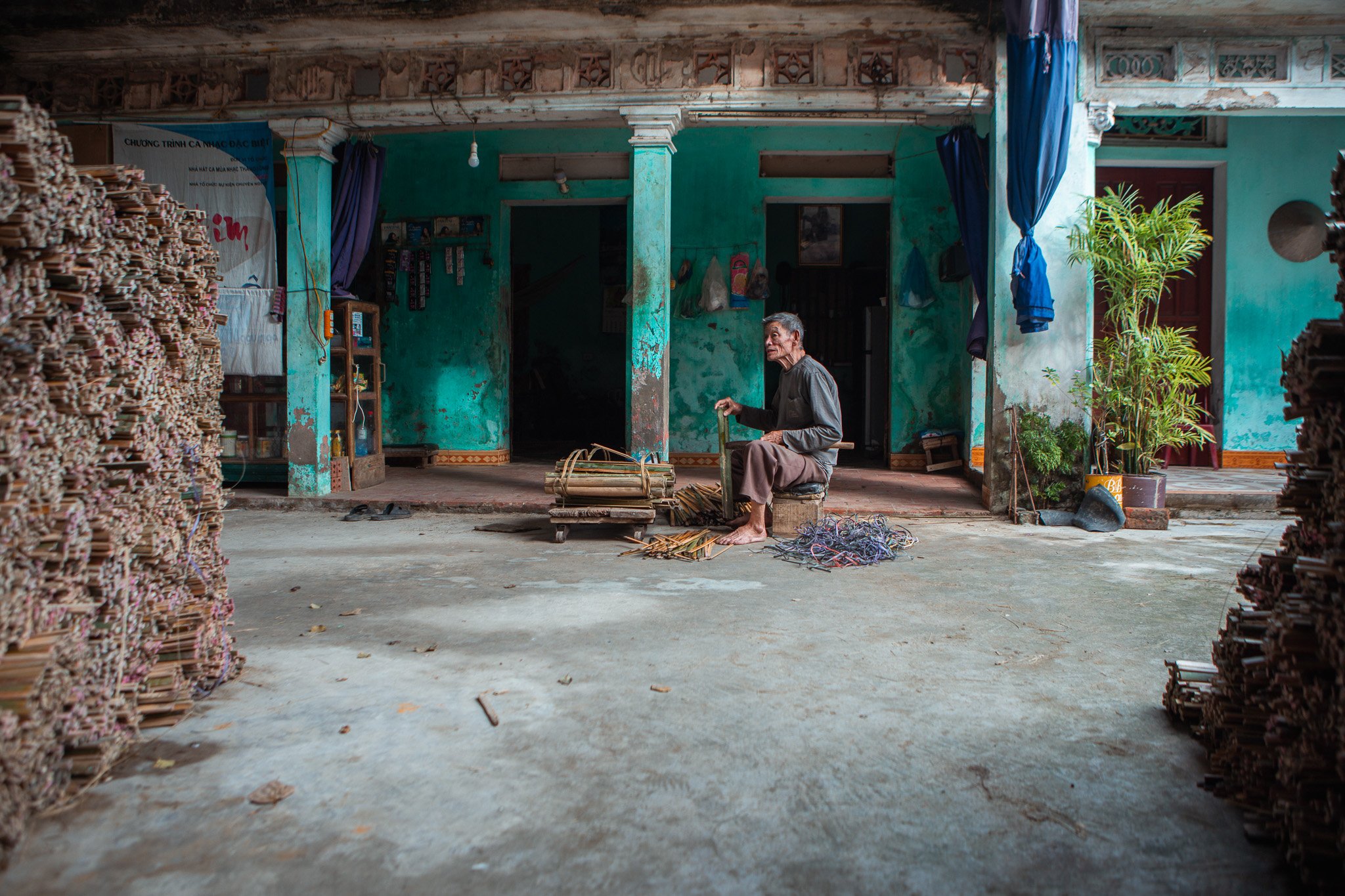
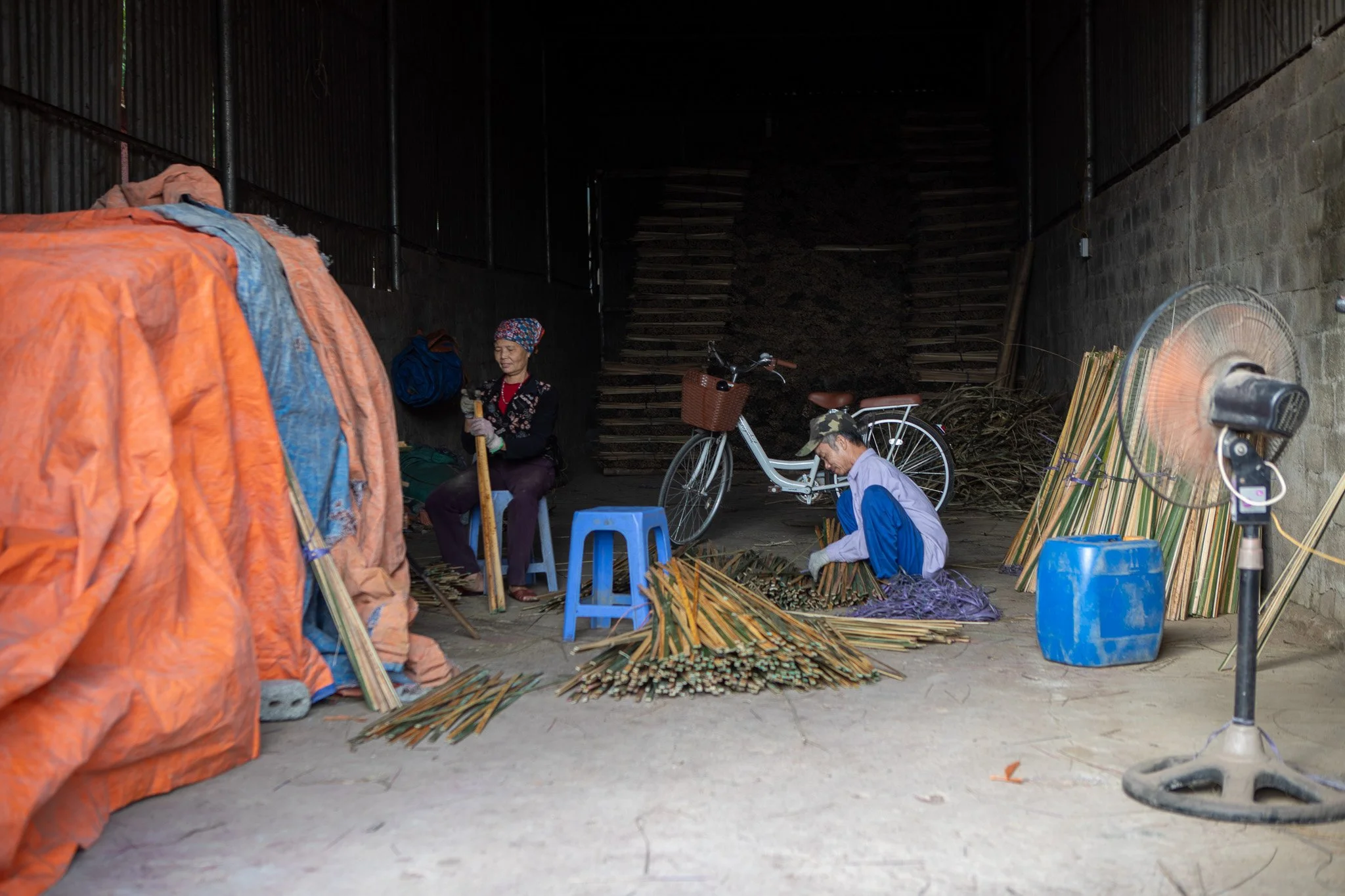
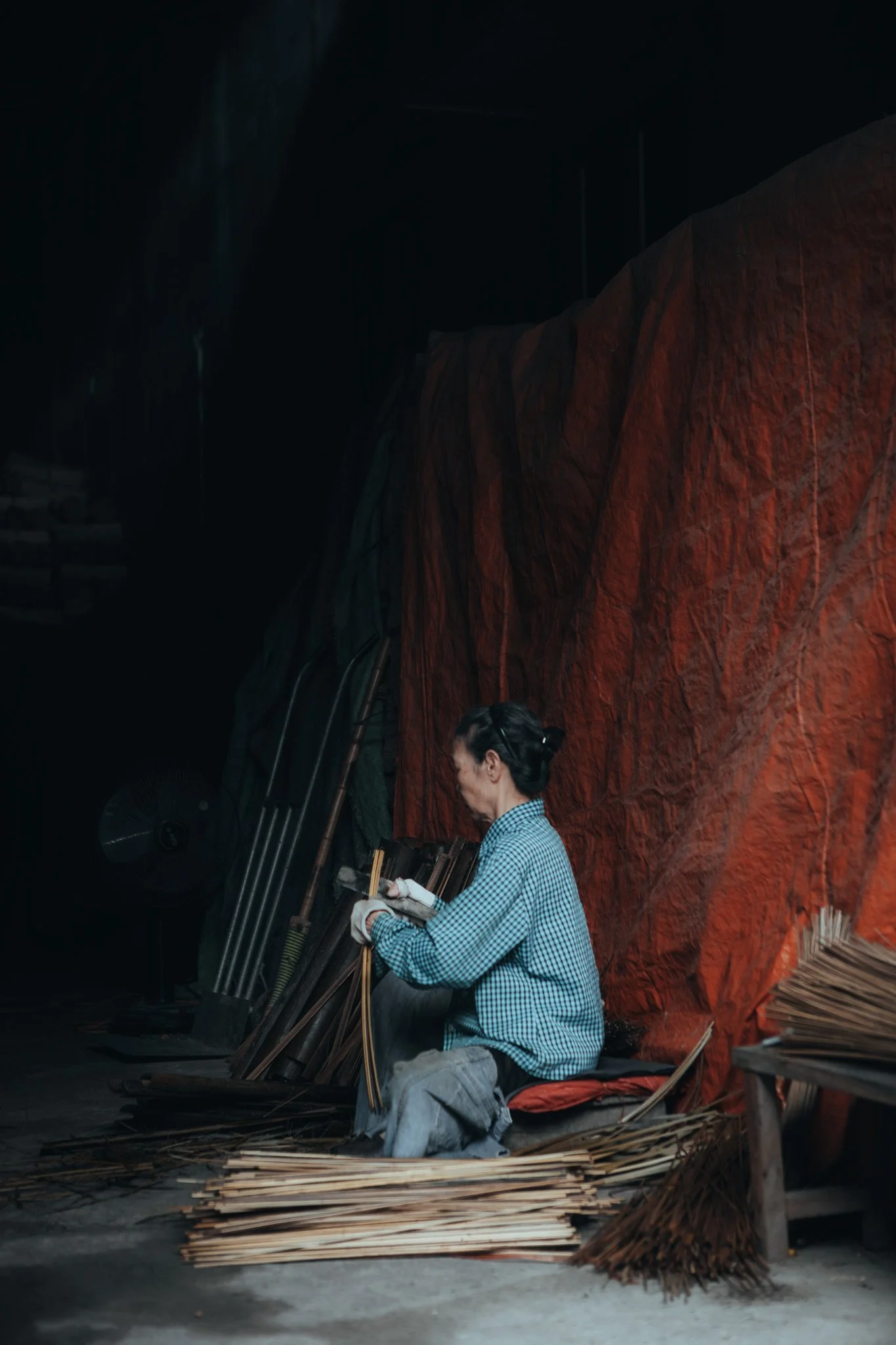
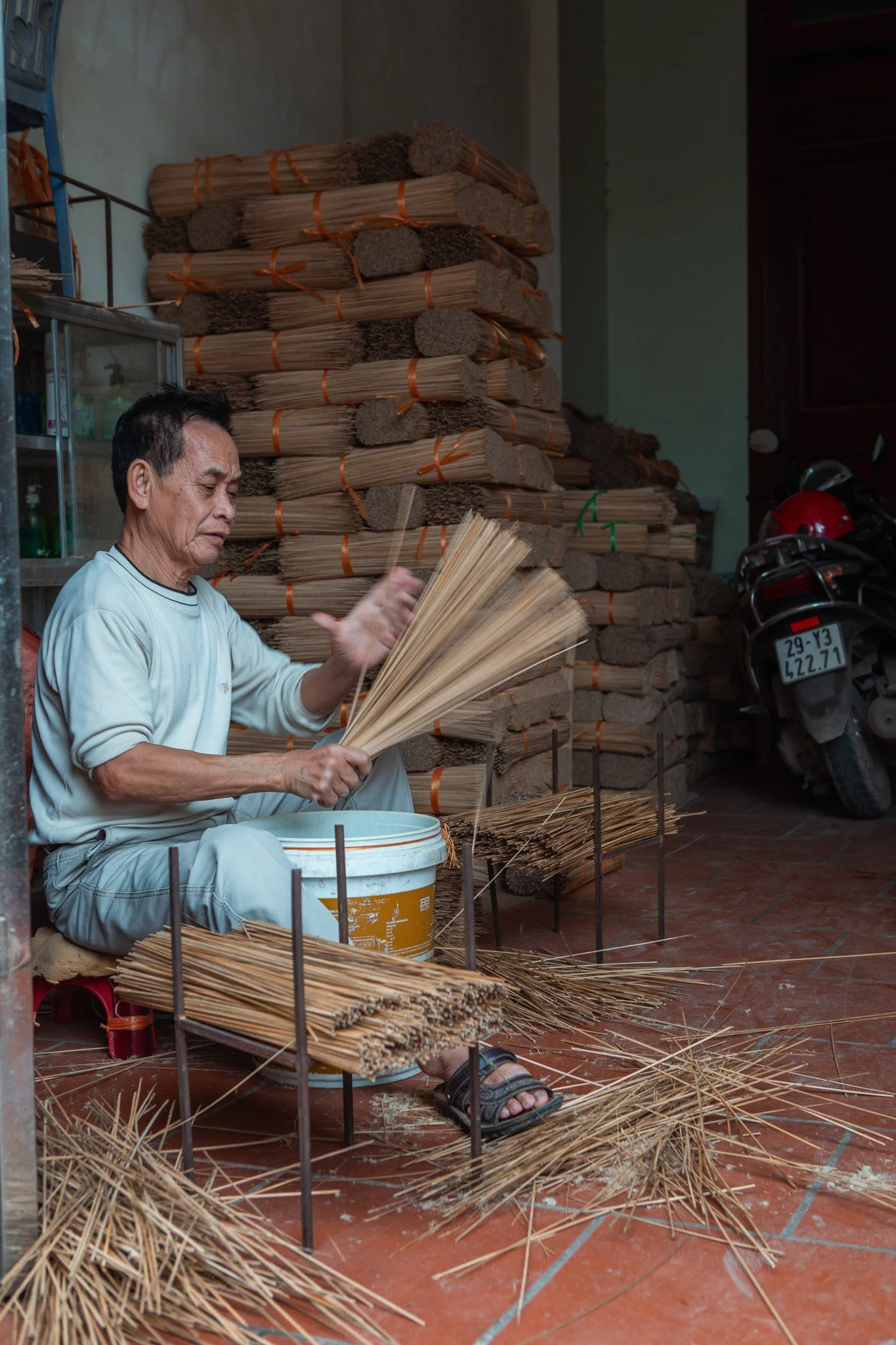
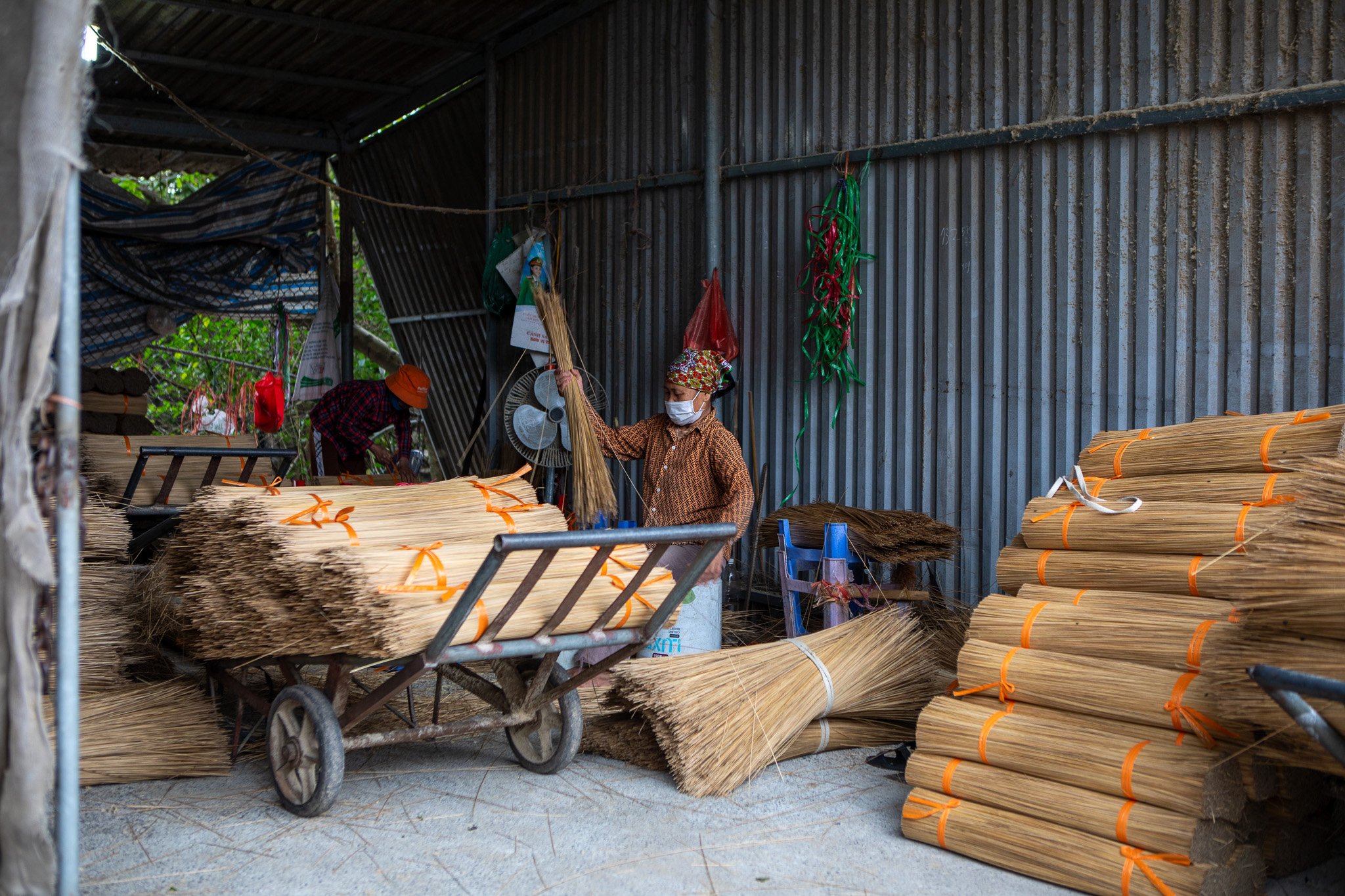
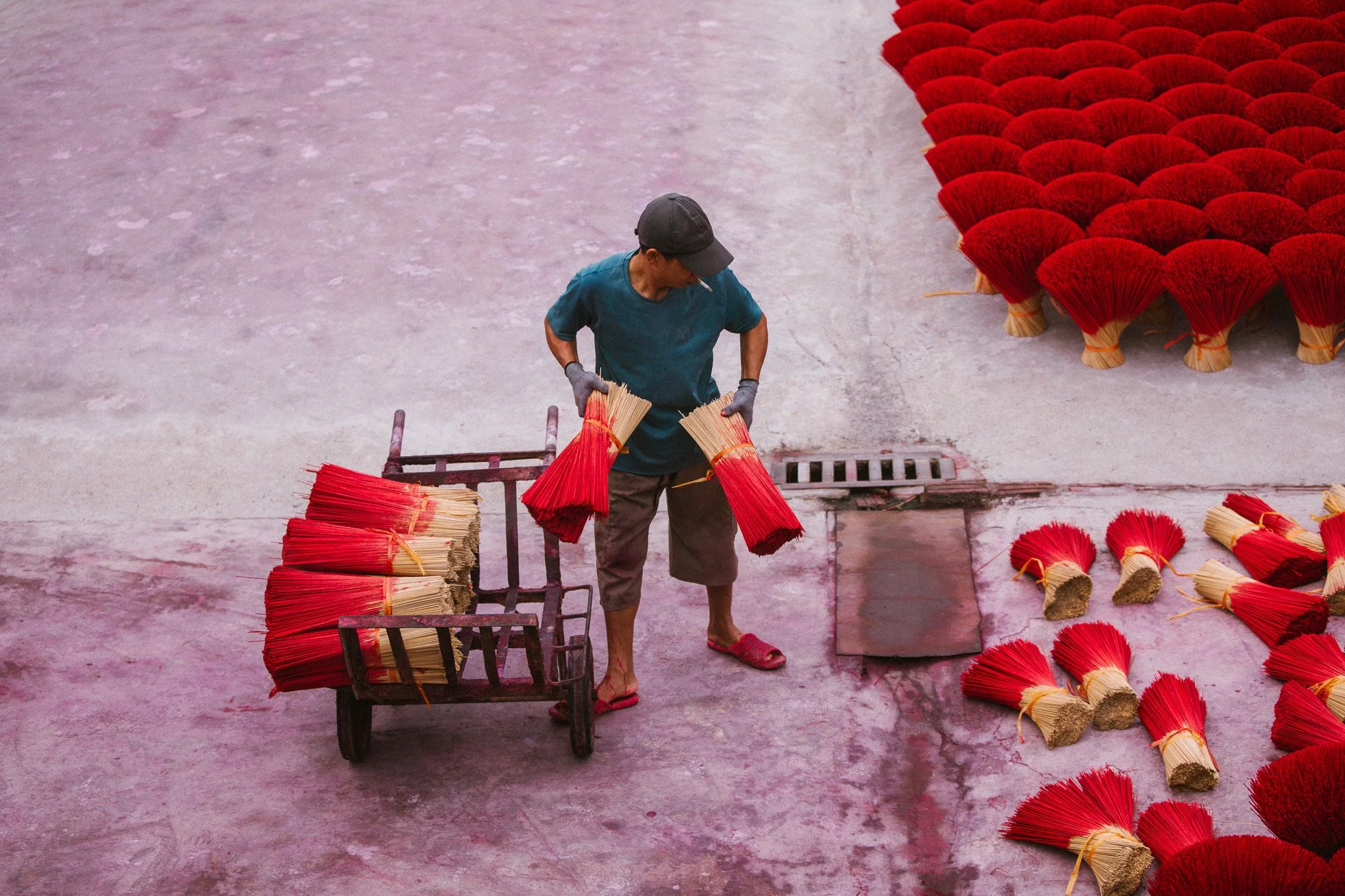
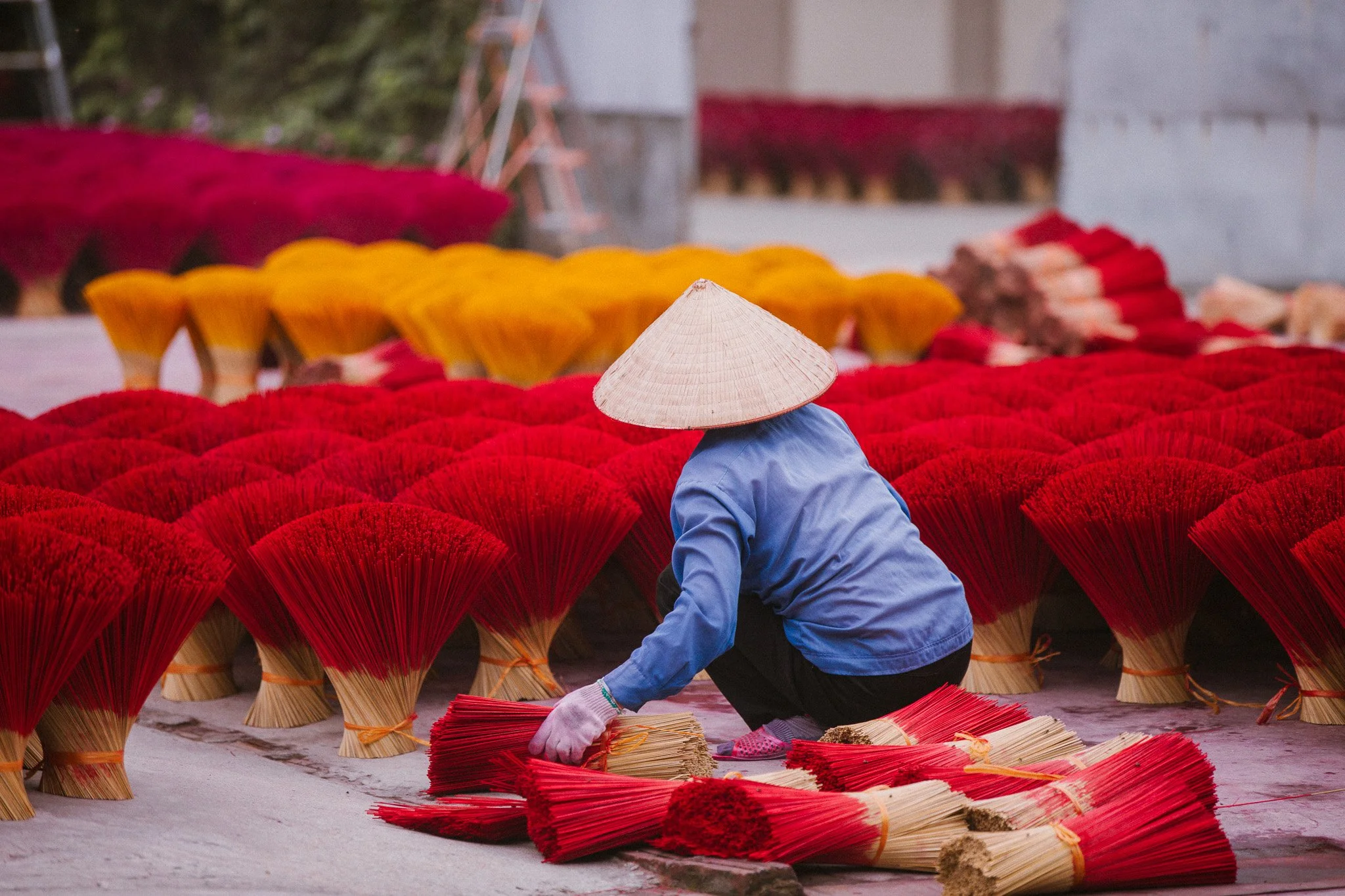
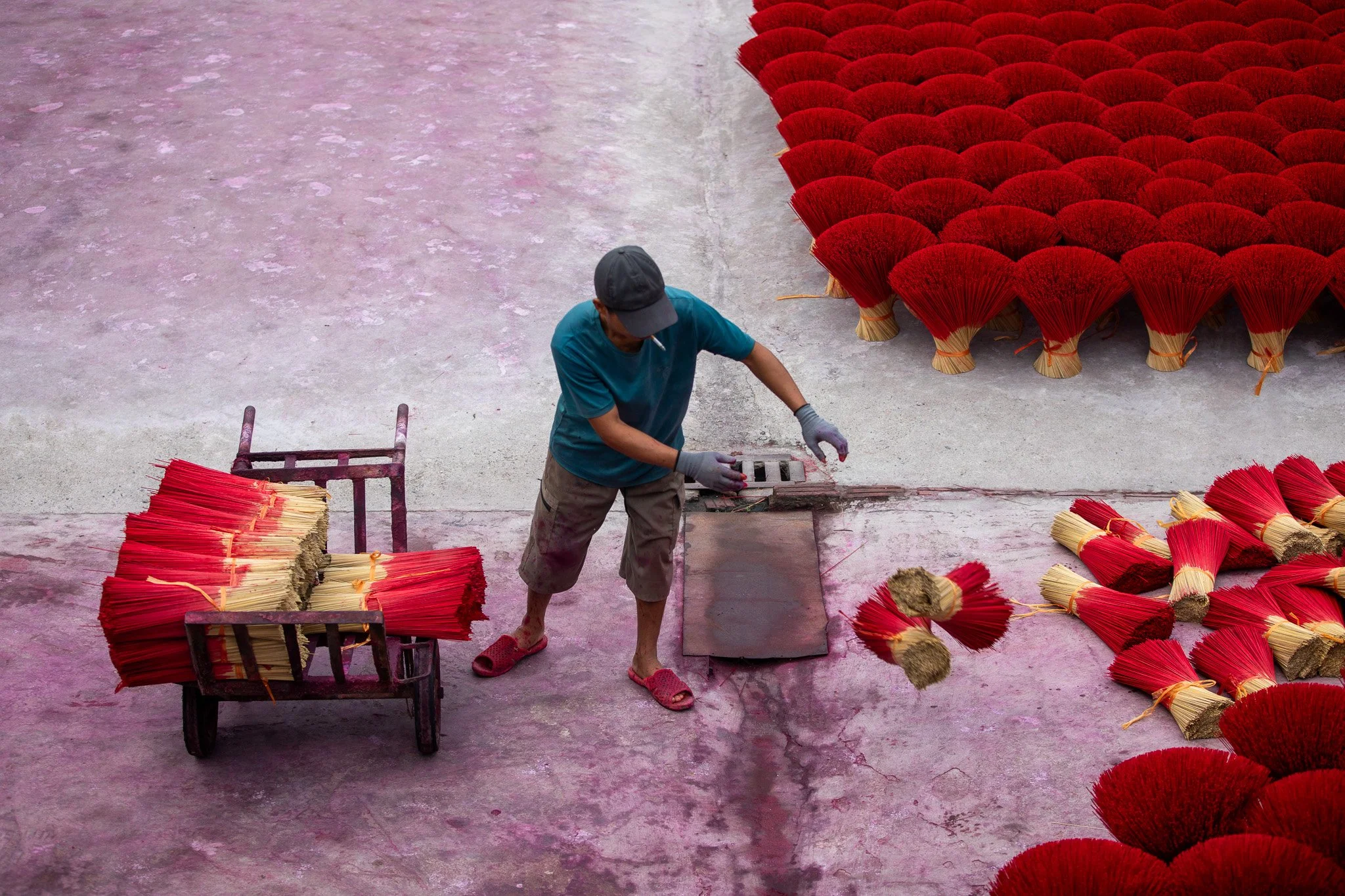
As the first rays of sunlight appear, trucks loaded with bamboo arrive in the village. The bamboo is cut into thin strips and trimmed into thousands of slender sticks. In workshops and courtyards, families sit side by side, binding the sticks into bundles with remarkable speed and precision. It is work that has been passed down through generations.
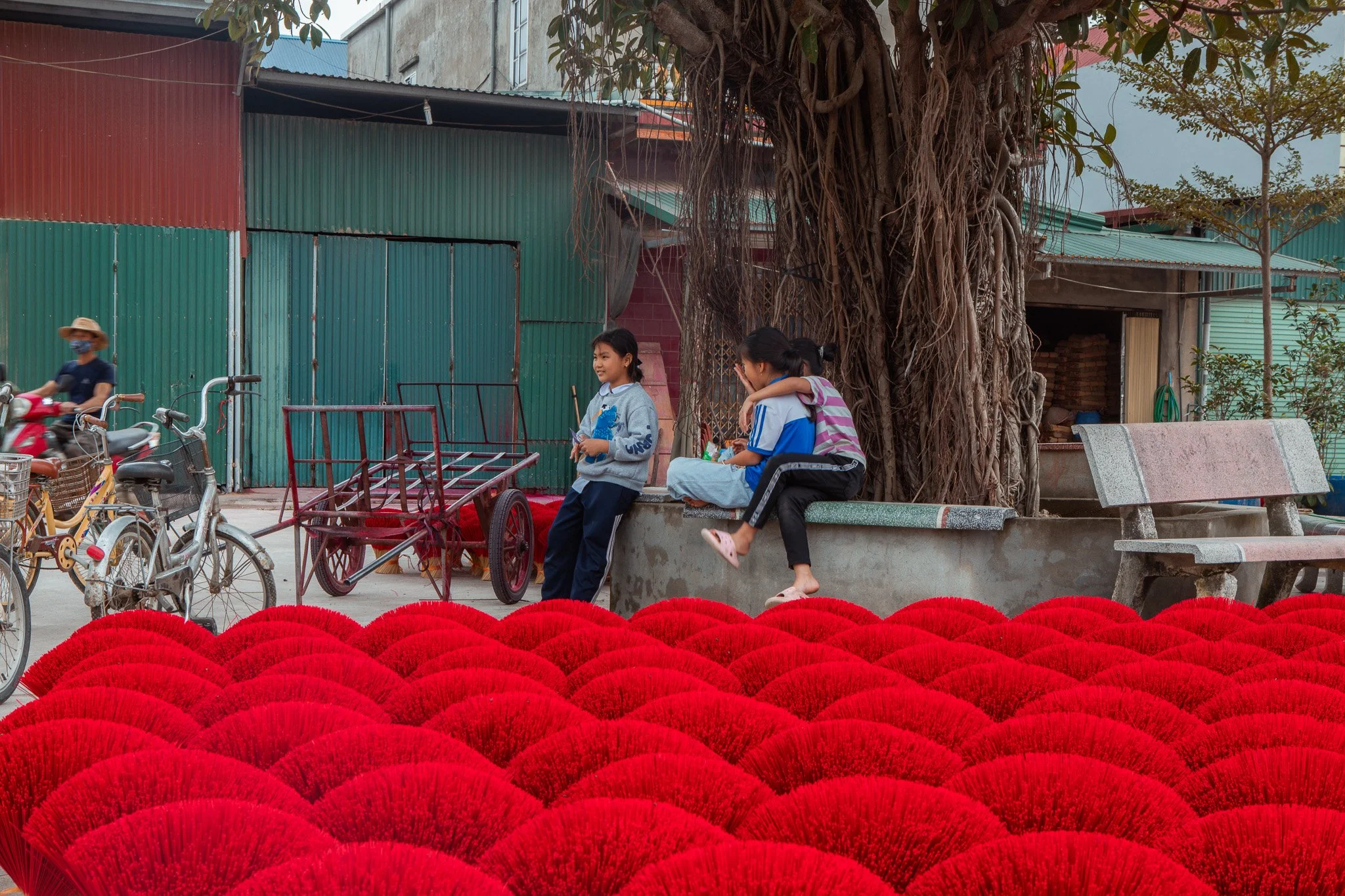
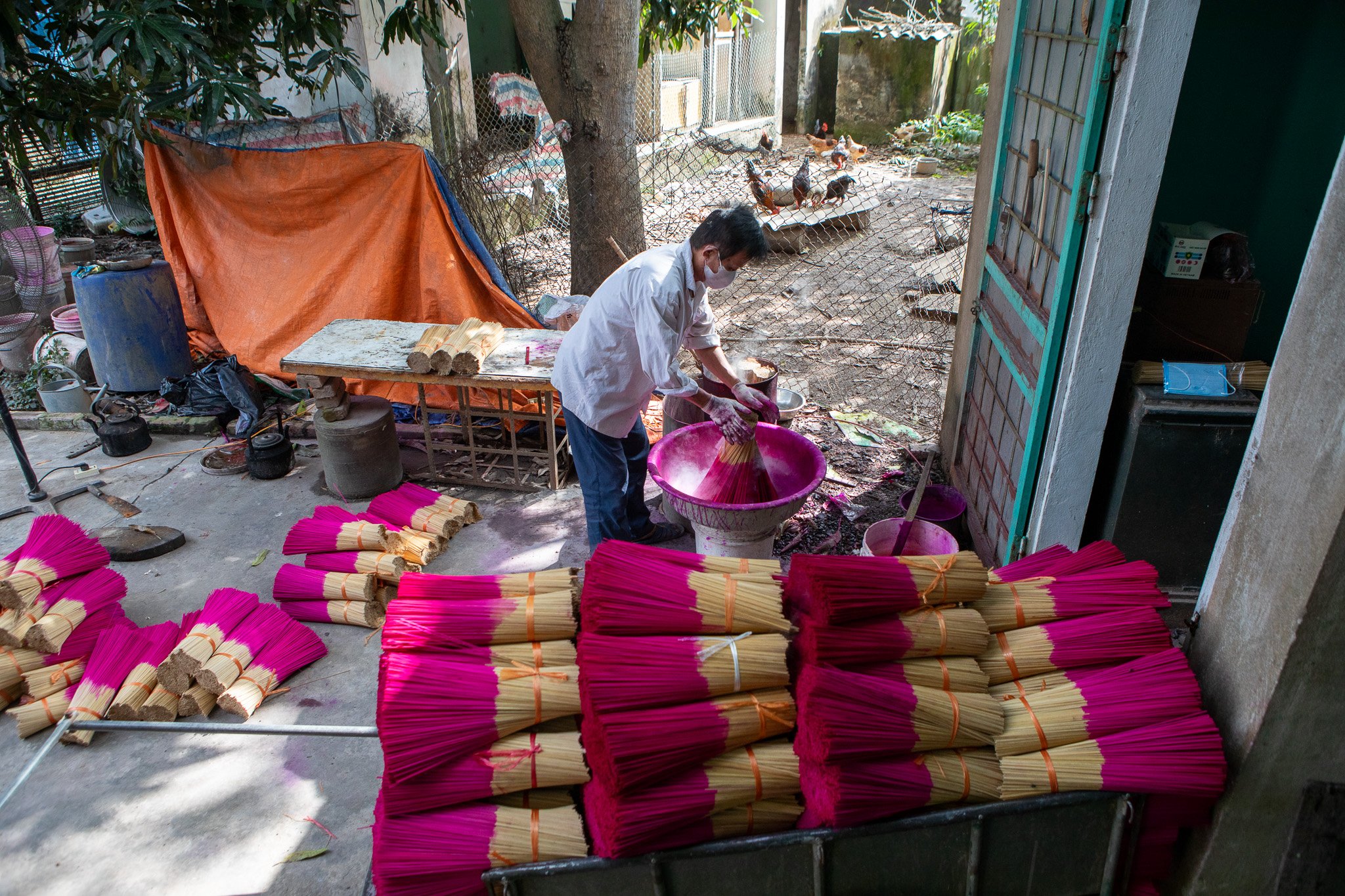
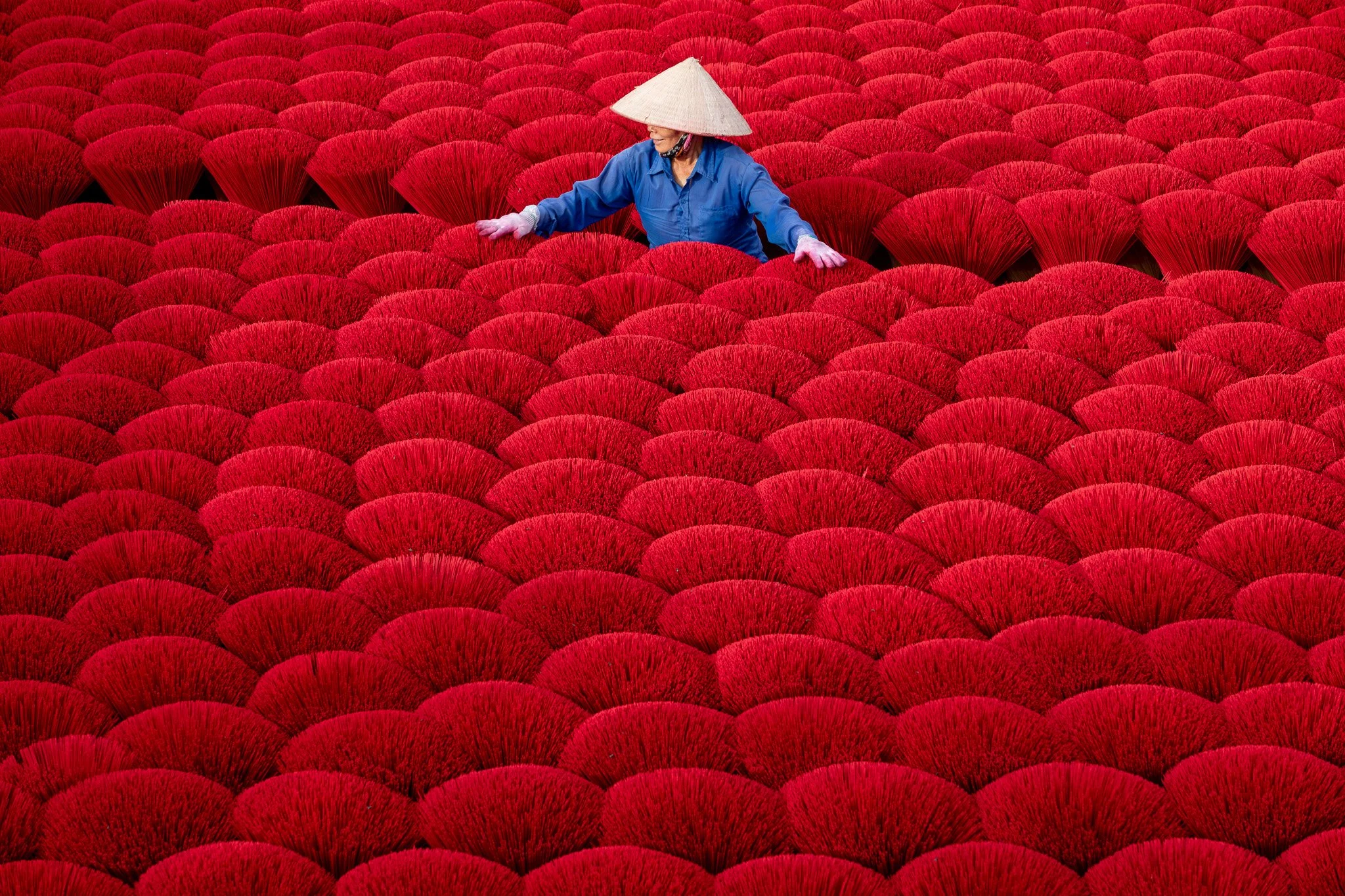
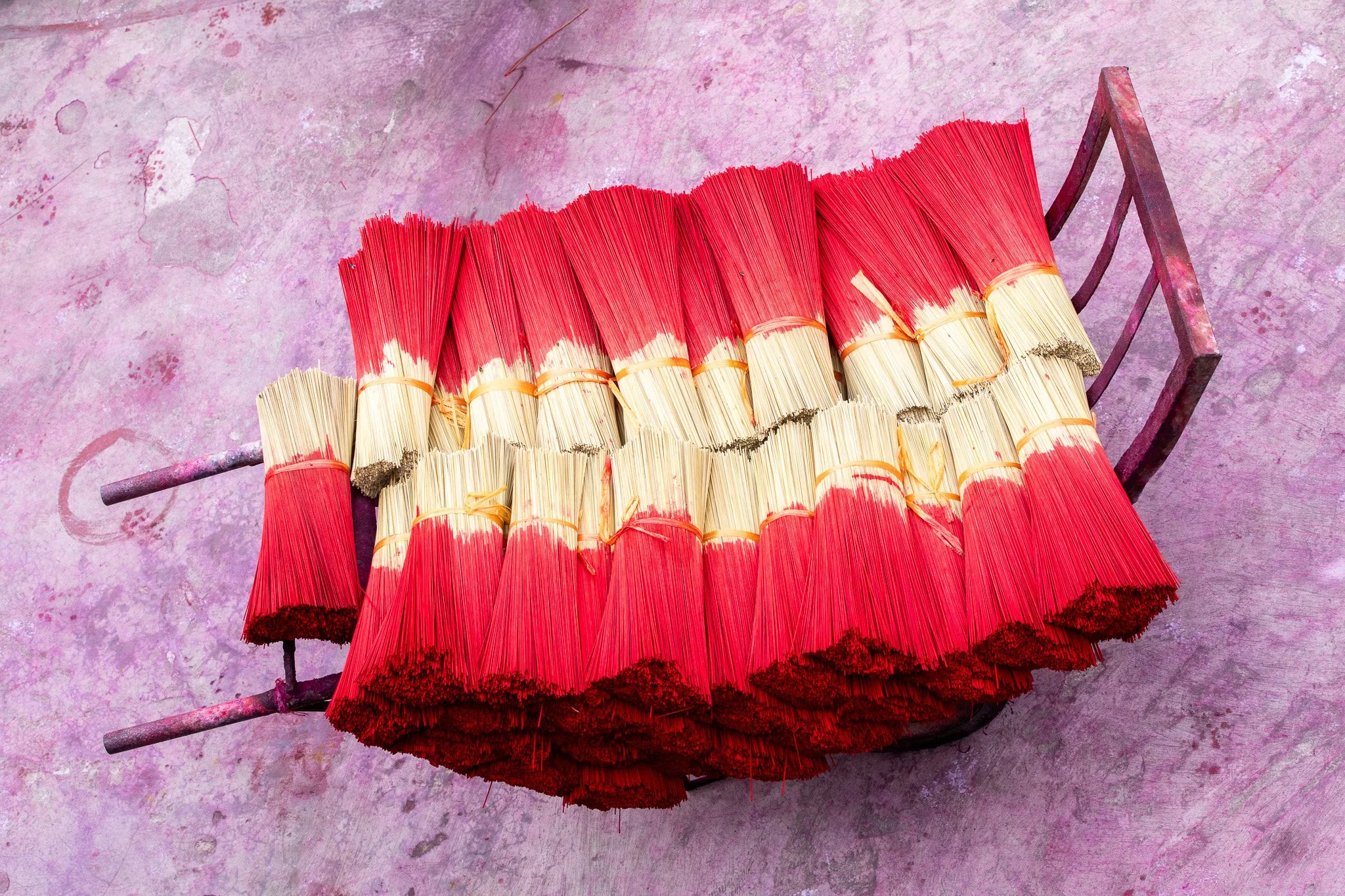
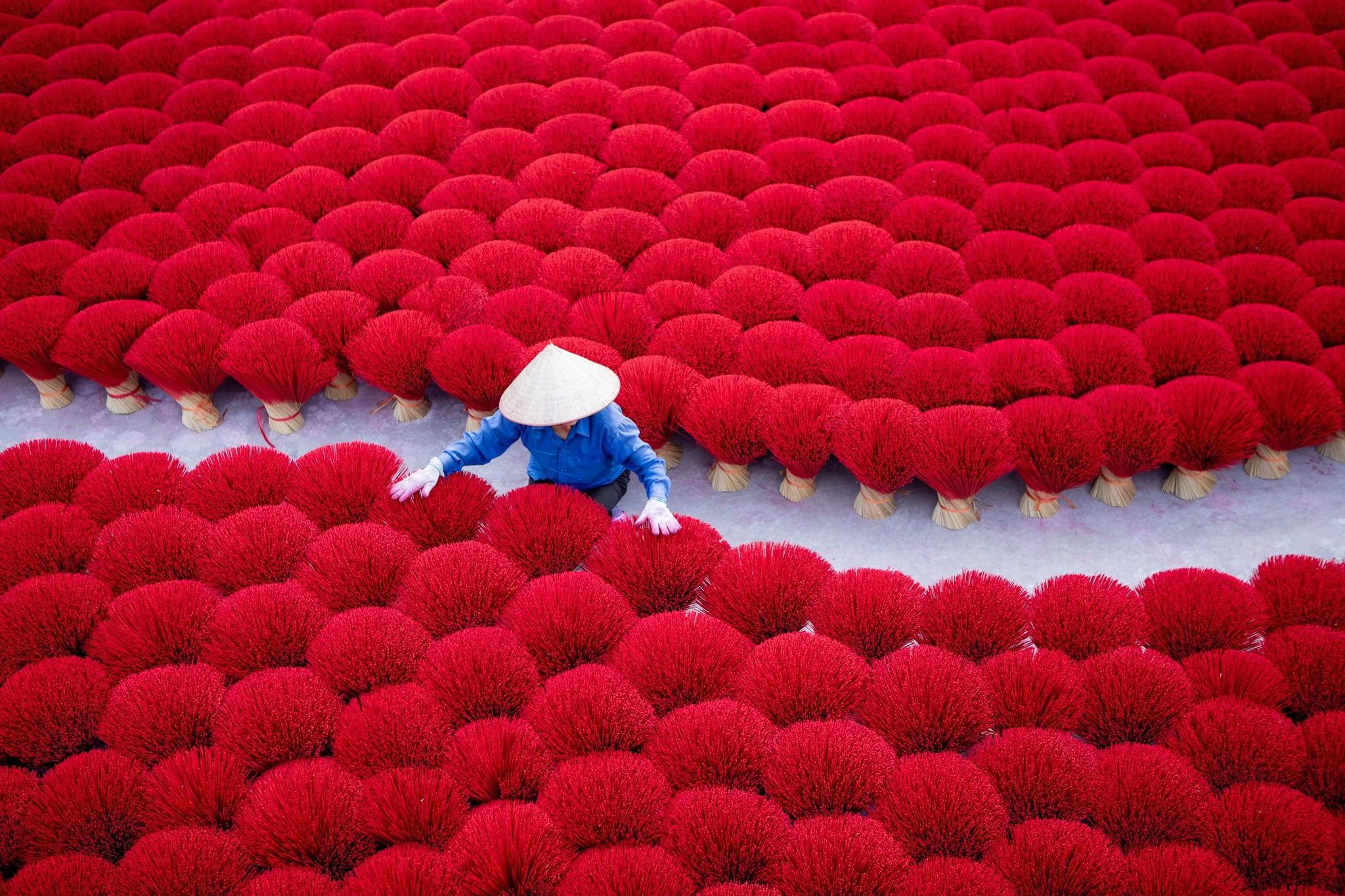
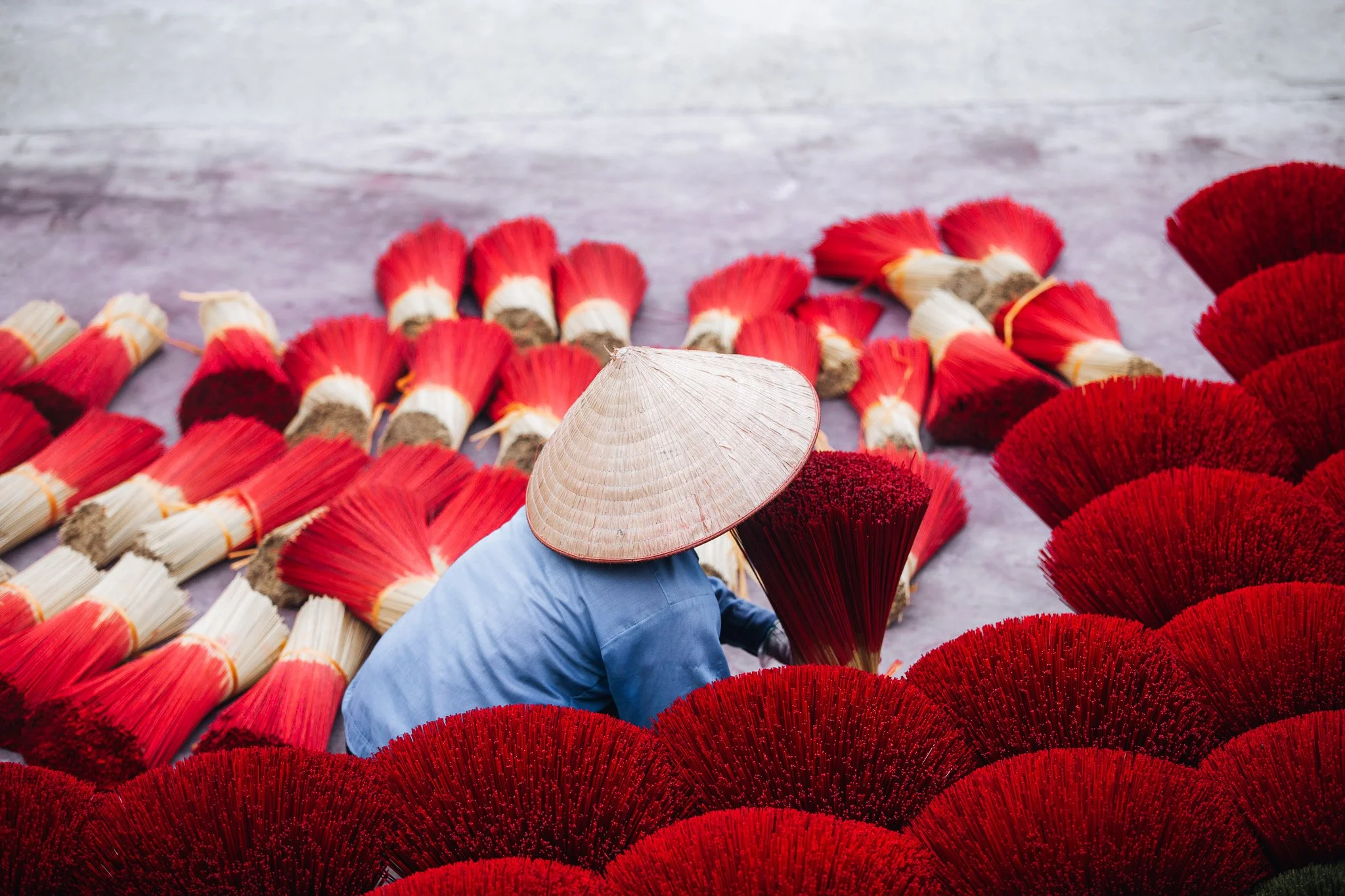
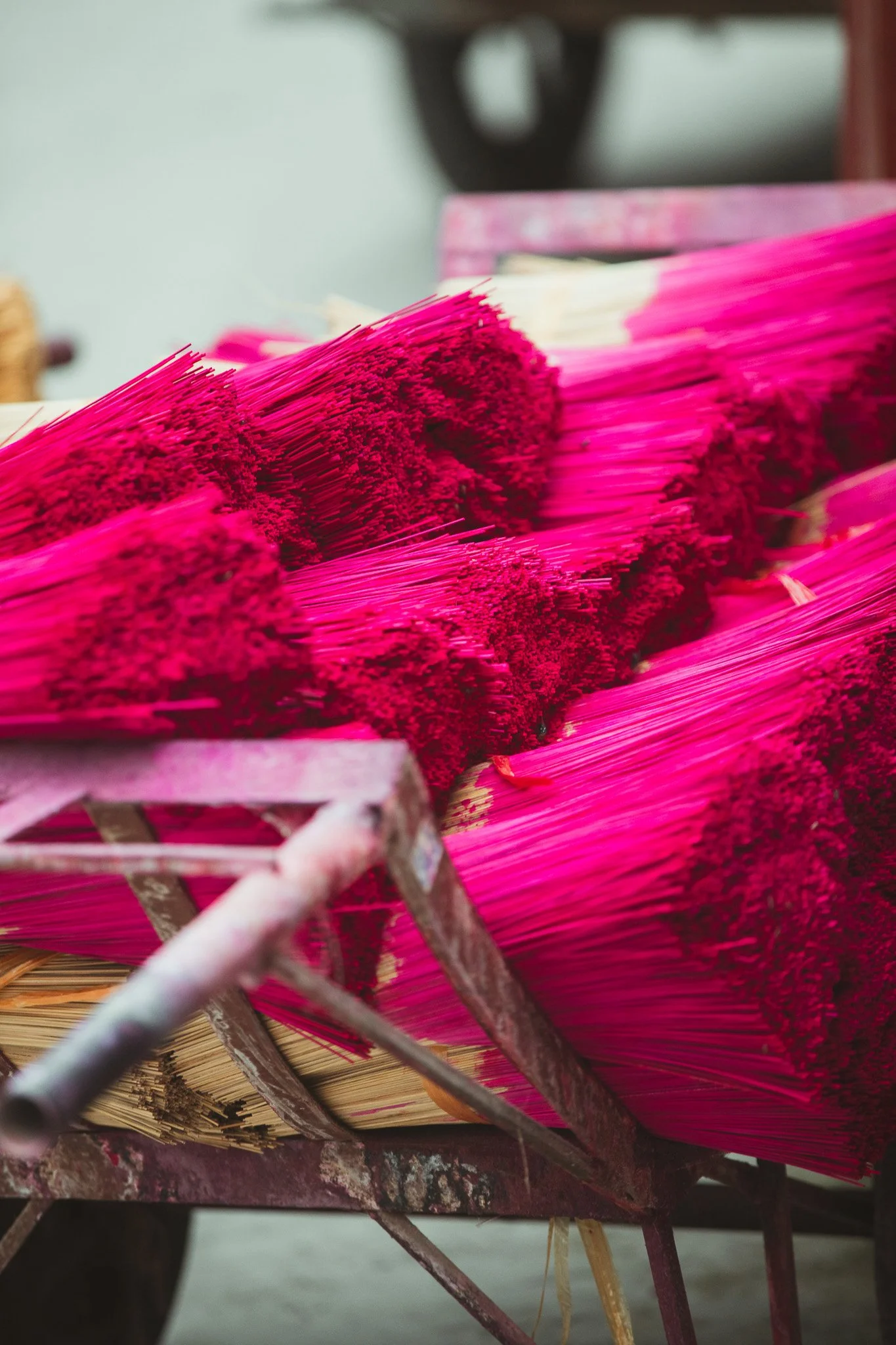
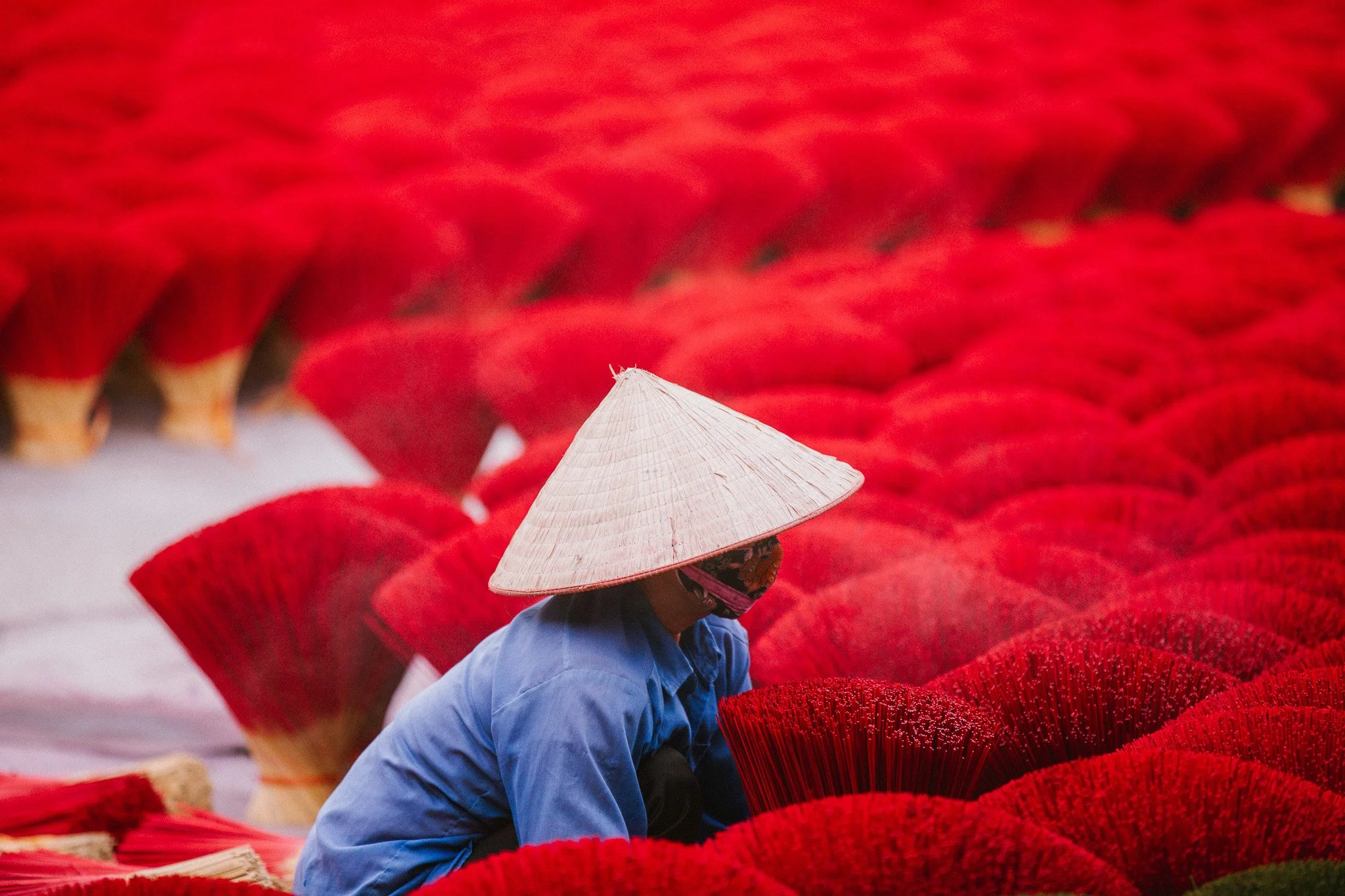
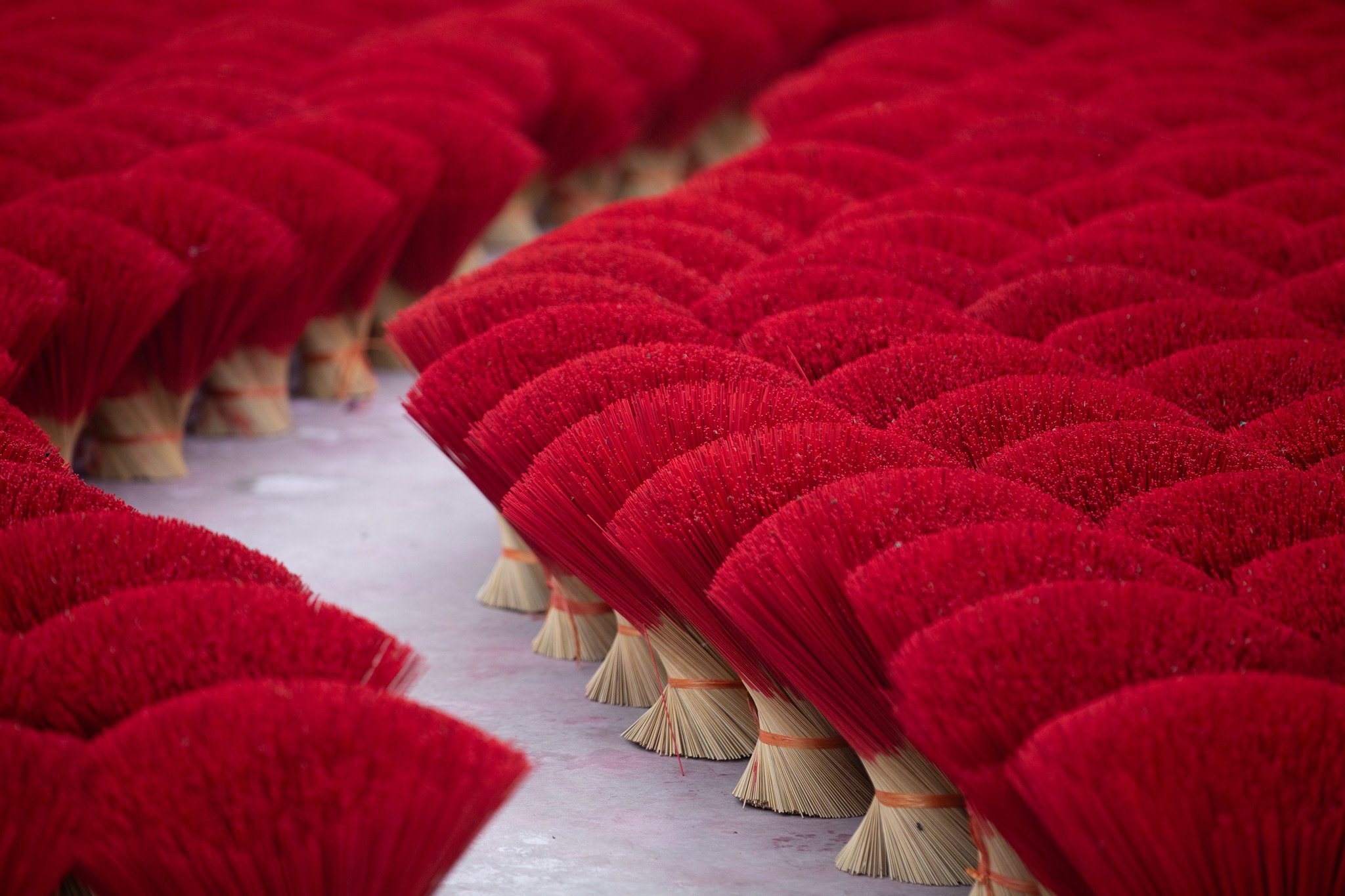
One by one, the lower ends of the sticks are dipped in bright red paint. In Vietnamese culture, red is the colour of luck, prosperity and celebration. The freshly painted bundles are then carefully spread out to dry in the morning sun. From above, the village transforms into a sea of colour: enormous crimson fans radiating across courtyards and fields, creating one of Vietnam's most extraordinary landscapes.
Yet behind these iconic images lies something far more meaningful than colour alone. Quang Phu Cau is a place where tradition, faith and family remain deeply intertwined. Entire households work together during the weeks before Tết. Grandparents, parents and children all play their part in preparing for the country's most important celebration.
As I wandered through the village, I realised that incense is more than a product. It is a bridge between generations, carrying prayers and memories, connecting the living with those who came before them. Every bundle of incense drying in the sun will soon burn somewhere in Vietnam, its fragrant smoke rising from a family altar as a gesture of remembrance, gratitude and hope for the year ahead.
Through my lens, I photographed the rhythm of a village preparing for its busiest season: bamboo arriving before sunrise, hands stained red from paint, colourful bundles drying beneath the winter sun, and the quiet pride of the people whose work keeps an ancient tradition alive.
Before the New Year burns bright, it begins here — in a small village where millions of incense sticks are made by hand, and where the spirit of Tết can already be felt in every cloud of colour. — Anouk Sassen